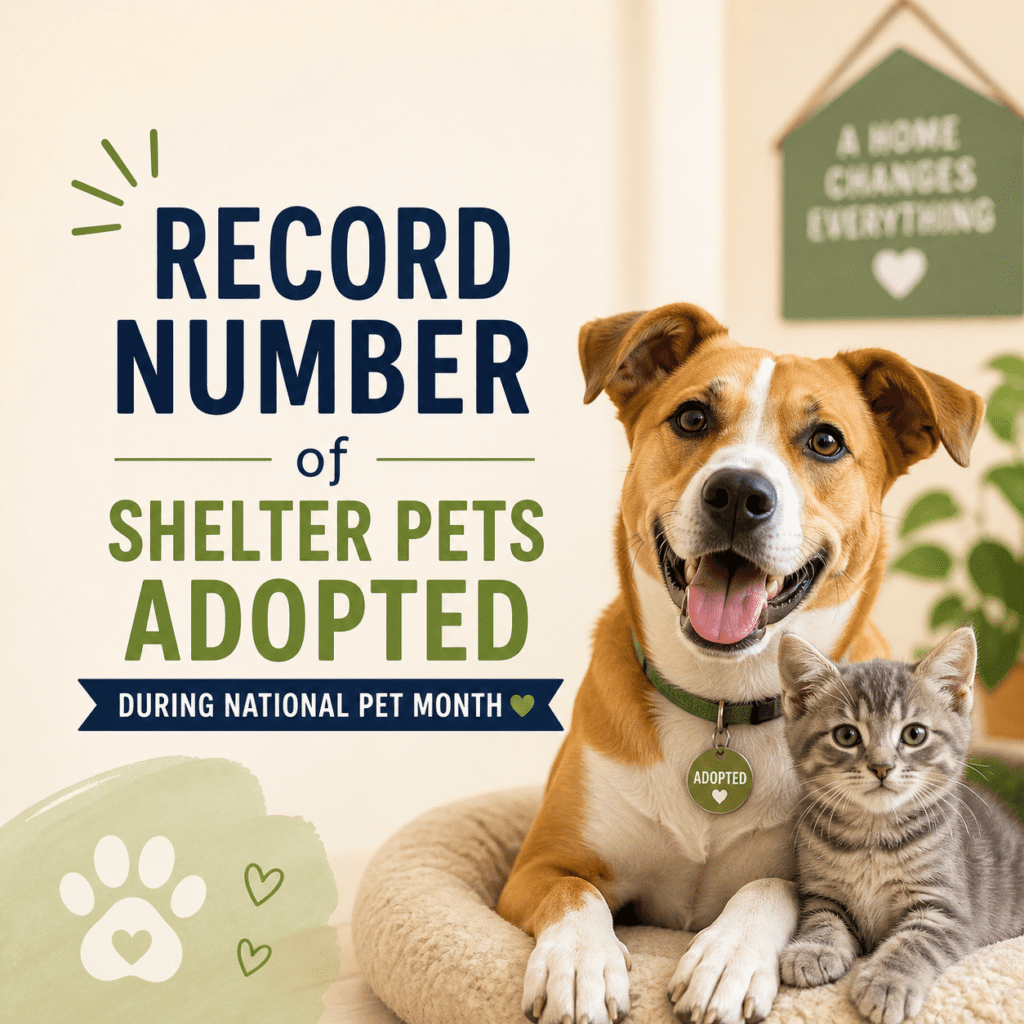
If you’ve been online at all in May, you’ve probably seen the usual National Pet Month stuff.
Cute reels. “Adopt don’t shop” posts. Dogs in bandanas sitting next to a sign that says my forever family is out there.
But this year, something different happened.
Shelters and rescues across the country reported a real spike in adoptions during National Pet Month. Not just a feel good vibe shift, an actual, noticeable jump. More pets leaving kennels. More cats getting scooped out of crowded back rooms. More people filling out applications, showing up for meet and greets, and doing the whole “we’re just looking” thing that turns into leaving with a leash and a new family member.
And yes. It matters. A lot.
The headlines are nice. The real story is what it means inside shelters
Shelters run on a weird mix of hope, routine, and constant pressure.
Even when staff and volunteers are doing everything right, the math can still get ugly fast. Intake goes up, kennels fill, medical cases pile on, and suddenly you’re making decisions nobody wants to make. When adoptions surge, it doesn’t just create happy “gotcha day” photos. It creates breathing room.
More adoptions during National Pet Month meant:
- more open kennels for new arrivals
- fewer animals stuck in stressful, noisy environments for long stretches
- fewer urgent pleas for fosters because the building is full
- more time per animal for enrichment and training
- better outcomes, overall
And for the pets. Honestly, the change is immediate. Some animals physically relax the moment they leave. The shelter smell fades off them. Their appetite comes back. They sleep properly. It’s like watching someone unclench.
So why did National Pet Month hit different this year?
There isn’t one single reason. It was more like a bunch of things lining up at the same time.
1. Fee waived events and “name your price” weekends actually worked
A lot of shelters leaned hard into reduced fee adoption events this May. Some waived fees completely for adult cats and large dogs. Others did “two for one” cat adoptions or included starter kits with food, toys, a crate, the basics.
And yes, adoption fees help shelters, obviously. But here’s the truth people inside rescue already know.
Adoption fees are rarely the thing that determines whether someone will be a good pet owner.
Sometimes it’s timing. Sometimes it’s confidence. Sometimes it’s just needing a little nudge to take the leap. Lowering the initial cost removes friction. People move faster. They say yes before fear talks them out of it.
2. Social media made specific pets go viral, and that turns into adoptions fast
I know. It’s easy to roll your eyes at “TikTok saved this dog.”
But it happens. Constantly.
A shelter posts one anxious husky doing that little spin in the kennel, or a senior cat with a grumpy face and one tooth, and suddenly the comments fill with “where is he located???” and “please tell me he’s still there.”
Those posts travel farther than shelters ever could on their own. And when they travel, they bring in adopters who might not have been browsing Petfinder at 11 pm otherwise.
The good side of this is obvious.
The tricky side is that the viral pets can get attention while quieter ones still sit. So shelters that did best this month were the ones that kept posting the non flashy pets too. The shy ones. The black cats. The older dogs. The bonded pairs that need patience.
3. There’s been more transparency about overcrowding, and people responded
This is the part that feels… heavier.
Many shelters have been public about capacity issues. Not in a guilt trippy way, more like “here’s what’s happening, here’s what we need, here’s what you can do today.”
And it worked, because people could see the stakes.
When you show a row of kennels and say, “we have 15 dogs in overflow crates tonight,” it breaks through the noise. It turns the abstract idea of “shelters are full” into something real.
The result this month was more action. More fosters. More adoptions. More people sharing posts with captions like “if you’ve been thinking about it, this is your sign.”
What types of pets were adopted the most?
Every shelter’s numbers look a little different. But the broad pattern was pretty consistent.
Adult dogs got a boost
Puppies always move. They just do.
Adult dogs are where you usually see the bottleneck. Especially large breeds. Especially bully mixes. Especially the ones with that stressed shelter energy that makes them look “too much” in a 30 second meet and greet.
This May, more adult dogs left shelters than usual. And that’s huge, because adult dogs are often the ones taking up kennels the longest.
Also, adult dogs are wildly underrated. You usually know their personality already. You often skip the worst of the chewing phase. Some are already house trained. And they’re still fun. Still goofy. Still obsessed with you.

Cats were adopted in pairs more often
This was one of my favorite little trends.
Rescues pushed hard on the “kittens do better in twos” message and people listened. More adopters chose bonded pairs or adopted two kittens at once. Which sounds like more chaos, but in practice it can be easier, because they entertain each other and learn bite inhibition and basically burn off their tiny gremlin energy together.
Even adult bonded cats got more attention. Which is rare, historically.
Seniors found homes (yes, really)
Senior pets are the heartbreak category. They’re calm, sweet, and completely overlooked because people worry about medical costs or “not enough time.”
During National Pet Month, a lot of shelters highlighted seniors with clear, honest storytelling. Not the pity angle. More like, “this is Daisy. She wants naps, snacks, and a human who works from home.”
That kind of framing works. It helps people picture real life with the pet. Not a sad poster. A Tuesday.
The hidden heroes of this adoption surge
You can’t talk about a record adoption month without talking about the people behind it.
Shelter staff and volunteers
This is a job where you can do everything right and still go home feeling like you didn’t do enough.
During high volume adoption weeks, staff are processing applications, doing meet and greets, calling landlords, checking vet references, handling returns, cleaning, medicating, comforting, and smiling through it because adopters are excited and you don’t want to dull that moment.
Volunteers step in to walk dogs, tidy cat rooms, take photos, write bios, transport animals, and basically keep the whole thing from collapsing.
Foster homes
Fosters are the reason shelters can say yes to intake and still avoid overcrowding.
They take in bottle babies, medical cases, shy dogs, mom cats with litters, undersocialized puppies, all the ones that would struggle inside a busy shelter.
And during National Pet Month, fosters made space. Which created a chain reaction. When fosters take an animal out, shelters can accept another. When that animal gets adopted, the foster can take another again.
It’s like a pressure valve.
Local businesses who sponsored adoption fees
This one is underrated.
When a local company covers fees for a weekend, it doesn’t just increase adoption volume. It also brings in people who wouldn’t normally walk into a shelter. They show up because it feels like an event. It feels welcoming.
And then they meet a dog who leans into their leg and that’s it. Game over.
The real question: will the momentum last after May?
This is where shelters get nervous.
A big adoption month is amazing, but it can be followed by a dip. People go back to routines. Summer travel starts. Kids are out of school. And shelters can fill again quickly, especially during peak kitten season.
So what keeps the momentum going?
A few things.
Keep it easy to adopt, even when it’s not a “special month”
Some shelters made adoption processes smoother this May. Longer hours. Faster application review. Better online listings. Clearer communication.
That stuff shouldn’t disappear on June 1.
People don’t adopt because they love paperwork. They adopt because they connected with an animal. The smoother the steps after that connection, the more adoptions actually happen.
Keep telling honest stories, not just posting cute photos
Cute photos are great. But the posts that move pets tend to include details.
- what the dog is like in a home
- whether they’re good with cats
- what scares them
- what makes them light up
- what kind of person would be perfect for them
It’s not about making the pet sound perfect. It’s about making the match feel real.
Keep supporting adopters after they take the pet home
Returns happen most in the first few weeks. Not because people are bad, but because transitions are messy.
The shelters seeing the best outcomes right now are the ones offering:
- post adoption support lines
- low cost training resources
- behavior helplines
- clear decompression guidance
- realistic expectations about the first 3 to 30 days
Which brings me to something that needs to be said plainly.
If you adopted during National Pet Month, the first month might feel weird. That’s normal
A shelter pet isn’t a blank slate. They’re not a stuffed animal. They come with history, even if you don’t know what it is.
So if your newly adopted dog is pacing at night, or your cat is hiding under the bed, or nobody is instantly cuddling like the adoption photo.
That’s normal.
Give them time. Keep things quiet. Build routine. Use treats like you’re bribing a tiny celebrity.
A lot of people follow a simple guideline called the 3 3 3 rule:
- 3 days to decompress
- 3 weeks to learn the routine
- 3 months to feel at home
It’s not a law of physics, but it helps set expectations. And expectations save adoptions.
What you can do right now if you want to help, even if you can’t adopt
This is the part people skip because they assume it won’t matter.
It does.
Foster, even short term
Some shelters offer weekend fostering or “vacation fosters” where you take a dog for a few days so they get a break and the shelter gets space.
You don’t have to be a perfect dog person. You have to be willing to follow instructions and send updates.
Donate targeted supplies
Shelters usually need boring stuff more than cute stuff.
Things like:
- canned kitten food
- puppy pads
- laundry detergent
- paper towels
- enrichment toys
- leashes and martingale collars
- cat litter
Check their wish list. Buy one thing. It helps.
Share posts, but do it strategically
Instead of just reposting, add context.
“Good with cats, house trained, 45 lbs, calm in a home” helps someone decide. Tag local groups. Tag friends who have been thinking about adopting.
Volunteer for photography or writing bios
A good photo changes everything.
So does a bio that makes the pet feel like a person, without being cringe. Shelters need that help constantly.
The bigger takeaway
National Pet Month isn’t magic. It’s just a moment when attention shifts.
But this year, that attention turned into action. A record number of shelter pets found homes, and behind every one of those adoptions is a tiny story that’s hard to explain if you haven’t seen it up close.
A dog leaving the kennel without trembling. A cat riding home in a carrier, quiet, but finally safe. A senior pet getting one last really good chapter.
And yeah, it’s a win. A real one.
If you’re reading this and you adopted during May, I hope you take a second to let it land. You didn’t just “get a pet.” You changed the math for a shelter, and you changed the whole life of one animal who needed you more than you probably realized.
If you’re still thinking about it.
Go meet them. Just meet them.
That’s how it starts.
FAQs (Frequently Asked Questions)
What is National Pet Month and why is it significant?
National Pet Month is an annual awareness campaign celebrated in May that highlights the joys of pet ownership and encourages adoption. This year, it was particularly significant because shelters across the country saw a noticeable spike in pet adoptions, helping reduce overcrowding and improving animal welfare.
How did National Pet Month impact animal shelters this year?
During National Pet Month, shelters experienced a real surge in adoptions which created much-needed breathing room. This meant more open kennels for new arrivals, fewer animals stuck in stressful environments, reduced urgent foster pleas, and more time for enrichment and training, leading to better overall outcomes for the pets.
What strategies helped increase pet adoptions during National Pet Month?
Several strategies contributed to the adoption spike: fee-waived or ‘name your price’ adoption events lowered financial barriers; viral social media posts helped specific pets gain widespread attention; and increased transparency about shelter overcrowding motivated people to take action through fostering or adopting.
Why do fee-waived or reduced adoption events encourage more adoptions?
Lowering or waiving adoption fees removes a common obstacle for potential adopters by reducing upfront costs. This helps people move faster from consideration to commitment, overcoming hesitation or fear about adopting, without compromising on the quality of pet ownership.
How does social media influence pet adoptions during campaigns like National Pet Month?
Social media can make specific pets go viral by showcasing their unique personalities or stories, reaching audiences far beyond traditional shelter channels. This increased visibility often translates into rapid interest and adoptions. However, shelters also need to promote less flashy pets to ensure all animals get a chance at finding homes.
Which types of pets saw the most adoption increases during National Pet Month?
Adult dogs, especially large breeds and bully mixes that typically face longer shelter stays due to their stressed energy levels, saw a significant boost in adoptions. While puppies usually find homes quickly, this year adult dogs benefited from increased attention and successful placements.
Cats, particularly seniors and those with special needs, also experienced a rise in adoptions as shelters highlighted their unique personalities and compatibility with various households. This shift helped diversify the types of pets finding loving homes.
Shelters also introduced new outreach programs and adoption events, further raising community awareness. As a result, more families felt empowered to welcome not only young animals but also older and special-needs pets into their lives.
Additionally, partnerships with local businesses and online campaigns broadened the reach of these efforts, ensuring that a wider audience could learn about available pets and the rewarding experience of adoption.
